
Anthropic gives outside AI watchdog “employee-like” access
The outside watchdog can publish its findings without Anthropic's approval.
Stories about Anthropic from the newsrooms DigiVona follows.
The outside watchdog can publish its findings without Anthropic's approval.

Anthropic's proposal requires evaluators to report any imminent risk to the Department of Commerce within 72 hours, after which the Department must present the evidence to a federal judge and await an order.
The composition of Anthropic’s workforce and the type of work getting done have changed significantly in the past year.
Over the weekend, Masad clarified that OpenAI would replace Anthropic as its default model provider. Claude will still be available to customers on the platform.
Robots and AI models together could take on about 80% of the work Americans do, Anthropic says. But robots are cheaper than people for just 0.3% of tasks today. The findings come from Anthropic’s new robotics study, which Business Insider picked up this week.

The US Federal Trade Commission has sent civil investigative demands to Anthropic and OpenAI, seeking documents about the safety incidents involving their AI models. The demands went out on Wednesday, Axios first reported, citing a person familiar with the matter.
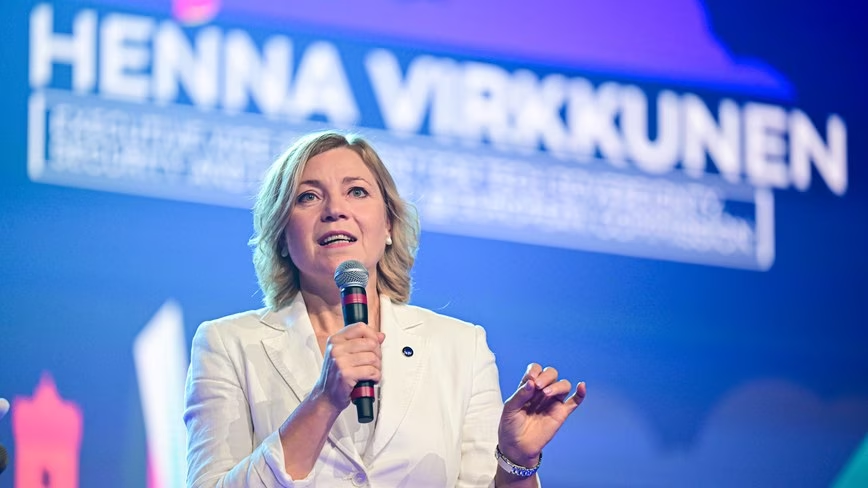
“Our AI Office has started enforcing these rules, and sent Requests for Information addressing issues such as security, external evaluation and monitoring how models are used,” EU tech chief Henna Virkkunen said in a speech in Dublin on 14 October.
Masad said the decision was made for a number of different reasons, including cost. Replit announced a partnership with OpenAI in August, but there was never any indication that it was no longer with Anthropic.

As AI labs continue to self-regulate, external evaluators play a crucial role in spotting risks.

Multiple AI giants have launched their own FDE schemes, but consultancies are also proving to be a vital part of the chain.